
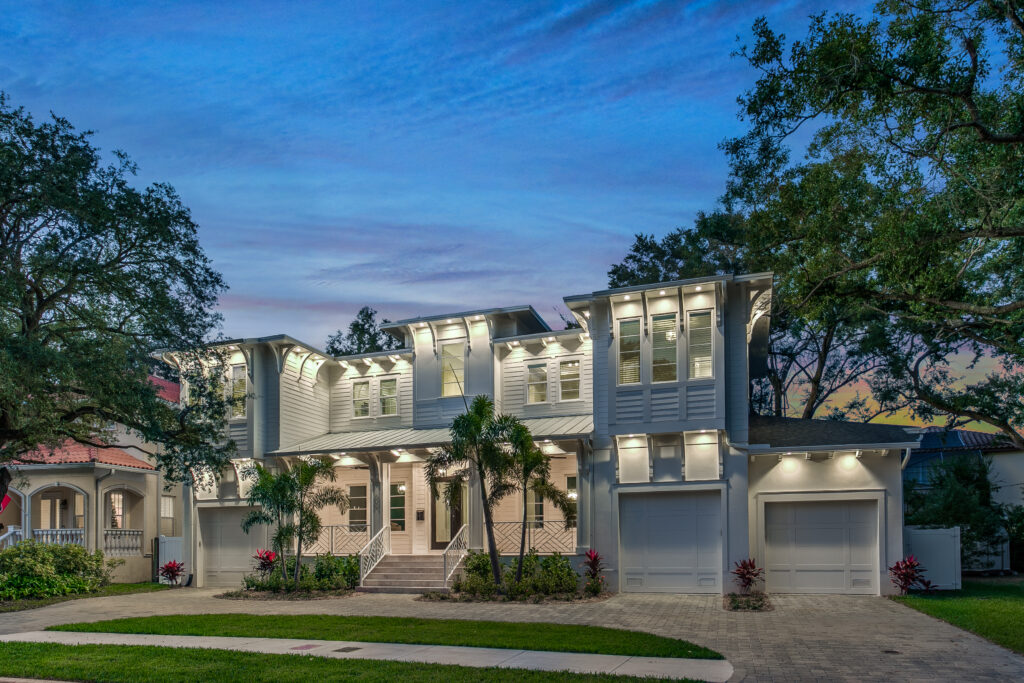
There’s a reason you can count Tampa’s truly deepwater, single-bridge-in neighborhoods on one hand. Davis Islands is one of them, and it’s why some of the most discerning homeowners in the Bay area aren’t asking whether to build here, they’re asking how quickly they can make it happen. If you’ve been drawn to the Islands for the waterfront access, the walkable village feel, or the sense that this address is simply in a category of its own, this post is for you. Here’s an honest look at what building on Davis Islands actually involves, and what to know before you start.
What Makes Davis Islands Different
Davis Islands sits roughly two miles from downtown Tampa, reached by a single causeway bridge from Bayshore Boulevard. That one point of entry is part of what shapes the neighborhood’s identity: it’s connected enough to be convenient, and contained enough to feel like a world apart from the rest of the city.
The Islands have deepwater access that most of Tampa simply can’t offer. Residents keep boats at home, launch directly from private docks, and are on open water in minutes. The waterfront isn’t decorative here, it’s functional, and for a certain kind of buyer, that’s the whole point.
Beyond the water, the village center along Davis Boulevard has the kind of low-key, walkable character that’s difficult to manufacture: a mix of local restaurants, coffee spots, and neighborhood businesses that serve people who actually live there, not visitors. The Roy Jenkins Pool, Marjorie Park Marina, and the connected trail system make the outdoor lifestyle easy to live day-to-day, not just on weekends.
The school district matters to many buyers as well. Davis Islands sits within the Plant High School attendance zone, one of the most sought-after in Hillsborough County, which factors into the calculus for families making a long-term home decision here.
All of this together, deepwater access, walkability, school district, and scarcity of buildable land, is what makes the Islands unique in the Tampa Bay market. There are other neighborhoods with water views, but few that combine all of these in one address.
The Architecture Already There, and What It Means for Building New
Davis Islands has one of the more architecturally interesting streetscapes in Tampa. The neighborhood developed largely in the 1920s and 1930s, which left a legacy of Mediterranean Revival and Spanish Colonial homes, red tile roofs, stucco exteriors, arched entryways, that still give the Islands their visual character. Walk a few blocks and you’ll also find mid-century ranch homes that took advantage of postwar growth, and now, increasingly, a wave of contemporary waterfront construction pushing the neighborhood’s aesthetic in a new direction.
New construction here isn’t starting from a blank canvas. A well-designed custom home on Davis Islands needs to understand its context. That doesn’t mean mimicking the Mediterranean Revival vocabulary, but it does mean paying attention to scale, roofline, and how the home presents to the street. Homes that ignore the neighborhood read as transplants. Homes that engage thoughtfully with it, even in a clearly modern language, tend to sit well on the block for decades.
The lots themselves inform a lot of these decisions. Waterfront parcels on the Islands tend to be deep rather than wide, with the premium square footage at the rear where the water is. That shapes everything from the floor plan orientation to where natural light comes from and how interior and exterior spaces connect. Getting these relationships right early in the design process is far easier than trying to adjust them later.
What Building on Davis Islands Actually Requires
Building on Davis Islands isn’t complicated, but it does require working with a builder who already knows the terrain. There are a few specific conditions that come up on nearly every project here, and understanding them upfront prevents surprises during permitting and construction.
Flood zone compliance. Virtually all of Davis Islands sits in FEMA Flood Zone AE or VE, which means finished floor elevations are set by the Base Flood Elevation (BFE) on the property’s FIRM panel, plus any freeboard your builder recommends above that. Building to BFE minimum is the floor, not the target. A well-built home here is typically elevated meaningfully above minimum to reduce insurance costs and provide a margin for future regulatory changes. This is a conversation to have early, because it affects foundation type, garage options, and the overall feel of the home at street level.
Current wind load code. Hillsborough County follows Florida Building Code requirements for high-velocity wind zones. All structural elements, connections, and roof assemblies are engineered accordingly, this isn’t optional, and a builder who has done it before doesn’t treat it as an afterthought.
Impact-rated openings. Every window and exterior door requires impact-rated glazing or a tested storm protection system. On a well-designed home, impact glass also does useful work year-round: it reduces noise, cuts UV exposure, and allows larger unobstructed openings without the visual clutter of shutters.
Seawalls. On waterfront lots, the condition of the existing seawall is one of the first things to evaluate before buying and before designing. Seawalls in this market range from structurally sound to in need of full replacement, and the cost difference is significant. A competent builder will assess this at the outset and factor it into the project budget honestly, not after construction is underway.
Dock and permitting coordination. Adding or replacing a dock involves the Army Corps of Engineers, the Florida DEP, and Hillsborough County, sometimes concurrently. The permitting timeline for dock work is longer than most buyers expect, budgeting for it early, both in time and dollars, is the right approach.
Inside a Recent Waterstone Project on the Islands
The 308 Caspian Avenue project gives a concrete example of what building on Davis Islands looks like in practice. The lot is a waterfront parcel with direct Bay views, and the design brief centered on making the most of that orientation without the home feeling like it was turning its back on the street.
The result is a home that’s organized around a clear indoor-outdoor connection from front to rear. The rooftop terrace was a deliberate design choice, it captures Bay views that a standard second-floor roof wouldn’t, and it extends the usable outdoor living area in a way that a pool deck alone couldn’t. The materials throughout are selected for the coastal environment: finishes that perform in salt air, hardware and fixtures specified for longevity, and mechanical systems positioned and protected accordingly.
Working on a project like this on Davis Islands requires managing relationships with multiple permitting bodies simultaneously and sequencing the work so that flood zone requirements, structural engineering, and dock coordination all move forward together rather than in sequence. That kind of coordination is what a builder with Islands experience handles without it becoming a disruption to the project timeline.
Interested in a private tour of a current Davis Islands project? Contact us to schedule a walkthrough and see the work firsthand.
Is Davis Islands Right for Your Custom Build?
Davis Islands is a strong fit for some buyers and a less obvious fit for others. Here is a practical way to think about it.
It’s likely a good match if: the waterfront lifestyle is central to how you want to live (boating, water access, the visual and physical presence of the water day-to-day), you value being within walking distance of a genuine neighborhood center rather than driving to everything, you want to be within a short drive of downtown Tampa and the South Tampa amenities you already use, and you’re planning a primary residence rather than a seasonal property. The school district also matters significantly to families who are thinking long-term about Plant High School.
It may be a less obvious fit if: you’re prioritizing lot size over location (Davis Islands lots tend to be narrower than suburban alternatives), you want significant privacy and separation from neighbors, or your budget is better suited to a neighborhood where land is less constrained.
The best way to know is a direct conversation. Reach out to the Waterstone team and we can talk through whether the Islands, or another South Tampa or St. Pete waterfront location, is the right starting point for your build.
Interested in a private tour of our current Davis Islands project?
Contact us to schedule a walkthrough and see the craftsmanship up close.
Frequently Asked Questions About Building a Custom Home on Davis Islands
What makes Davis Islands different from other Tampa neighborhoods for new construction?
Davis Islands offers a combination that’s rare in the Tampa Bay market: true deepwater boating access, a walkable village center, the Plant High School district, and a single-bridge-in location that creates a genuine sense of neighborhood identity. The supply of buildable lots is finite and shrinking, which makes it a particularly deliberate choice for buyers who have considered the alternatives.
Do I need to build above the flood elevation on Davis Islands?
Yes. Virtually all of Davis Islands sits in FEMA Flood Zone AE or VE, which sets a minimum finished floor elevation for any new construction. Most builders and engineers recommend going meaningfully above that minimum to manage insurance costs and account for future regulatory adjustments. This is one of the first conversations to have with your builder before design begins.
Is there an architectural review process for new homes on Davis Islands?
Davis Islands is within City of Tampa jurisdiction, so new construction goes through standard city permitting rather than a neighborhood HOA architectural review. That said, Hillsborough County and Tampa do have specific requirements around setbacks, lot coverage, flood elevation, and coastal construction that affect what you can build. An experienced local builder will walk you through these before design is finalized.
How much does a custom home on Davis Islands typically cost?
Cost varies significantly based on lot, square footage, finish level, and site conditions including seawall status and required elevation. A useful starting point is a direct conversation with a builder who has completed projects on the Islands recently, they can give you a realistic range based on current labor and materials costs rather than ballpark figures that may not reflect current market conditions.
Are there waterfront lots still available on Davis Islands?
Buildable waterfront lots on Davis Islands exist, but the supply is limited. Most activity involves teardown-and-rebuild of existing structures rather than vacant lot construction. Working with a builder who has active relationships in the neighborhood is often the fastest path to finding an opportunity before it reaches the open market.
What’s the timeline for building a custom home on a Davis Islands lot?
A realistic timeline from signed contract to move-in for a custom home on Davis Islands is typically 14 to 20 months, depending on design complexity, permitting, and whether dock or seawall work is involved. Flood zone permitting and any coastal construction requirements can add time if they’re not anticipated from the start. Getting into detailed pre-construction planning early compresses the overall schedule.
Does Waterstone build on client-owned lots on Davis Islands, or only spec homes?
Waterstone works with clients who own their lot and with clients who are still in the process of identifying the right property. If you have a lot in mind or already under contract, the conversation starts with a site evaluation. If you’re still searching, Waterstone can help assess candidate properties before you commit to a purchase.
What should I know about seawalls and dock permitting before I buy a lot?
Seawall condition is one of the most important due diligence items on any Davis Islands waterfront purchase. Seawall replacement is a significant cost, and the condition isn’t always visible from a standard inspection. It’s worth having a marine contractor evaluate the wall before closing. Dock permitting involves multiple agencies, Army Corps of Engineers, Florida DEP, and the City of Tampa, and timelines can run longer than expected, so factoring that into your overall project schedule from the start is the right approach.
Is Davis Islands a good fit for a full-time residence, or mainly a second home market?
Davis Islands functions primarily as a full-time residential neighborhood. The school district, walkable village center, and proximity to downtown Tampa and South Tampa amenities make it particularly well-suited as a primary residence. It attracts second homeowners as well, particularly buyers looking for a waterfront base in the Tampa Bay area, but the neighborhood’s character is built around people who live there year-round.
How do I get an early look at Waterstone’s current Davis Islands project?
The best way is to reach out directly. Contact the Waterstone team to schedule a private walkthrough of the current project. It’s the most concrete way to see the quality of construction firsthand and to have a real conversation about what building on the Islands looks like from start to finish.